

Group website:
Other company websites:
Choose website









Reducing Inspection Delays at U.S. Ports of Entry with Advanced X-Ray Transportation Security



03 July 2026
Reducing Inspection Delays at U.S. Ports of Entry with Advanced X-Ray Transportation Security
Modern ports of entry, cargo terminals and transportation checkpoints need to inspect more vehicles, more goods and more people without creating operational delays. LINEV Systems X-ray security solutions help U.S. agencies reduce manual inspection workload, improve detection confidence and keep legitimate traffic moving.
Key Takeaways
- Advanced X-ray inspection systems help U.S. transportation facilities reduce manual search workload and improve checkpoint productivity.
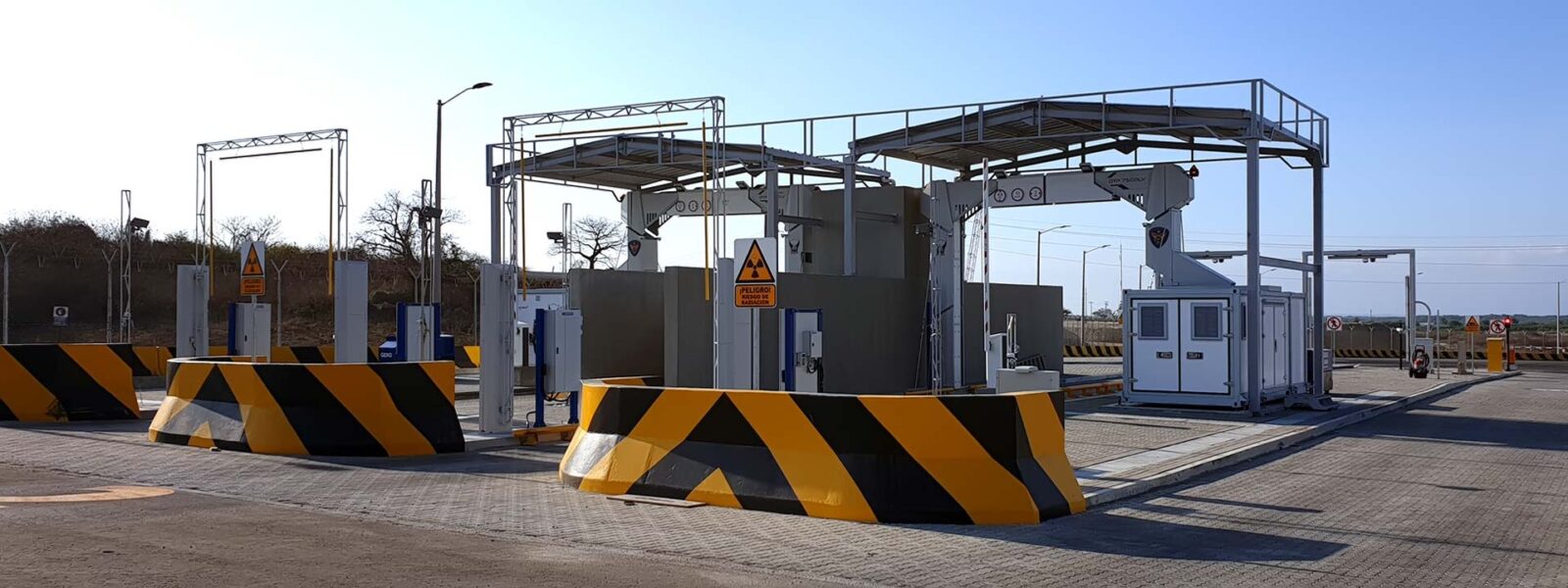
- Drive-through solutions such as the DTP 320DVB support faster vehicle and cargo screening without unnecessary unloading or long traffic stoppages.
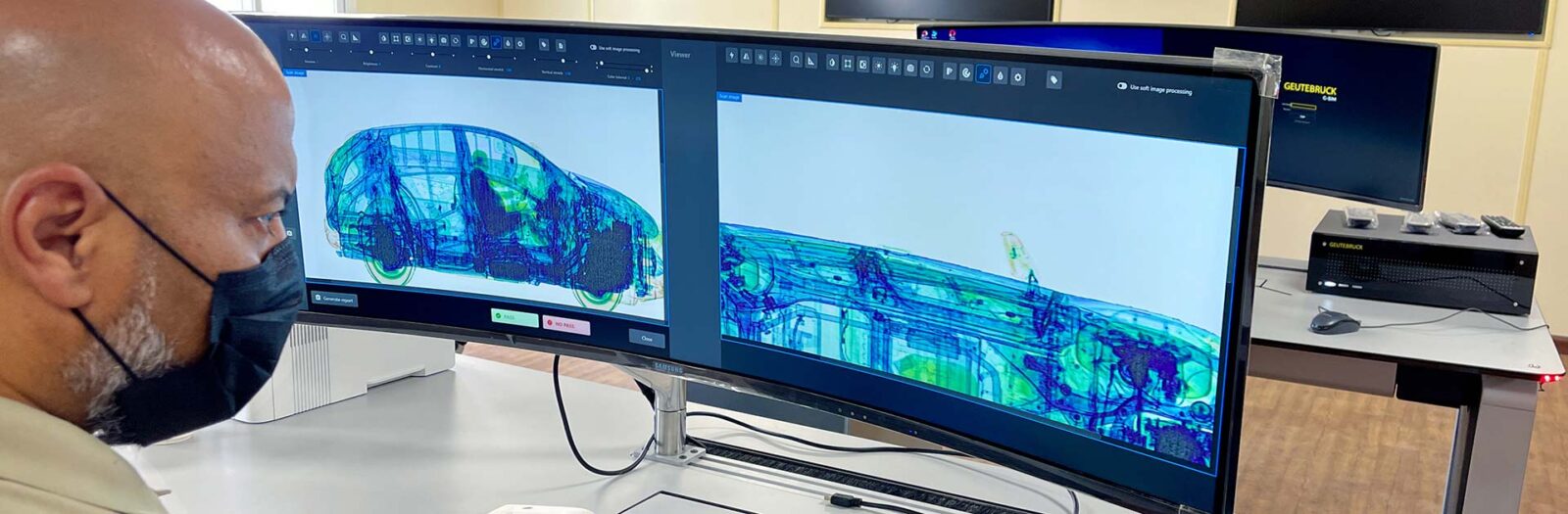
- Multi-energy inspection technology improves material discrimination and helps operators identify hidden threats, contraband and undeclared goods with greater confidence.
- Mobile Inspection Points and CONPASS personnel screening systems help agencies build flexible, layered security for ports, borders and transportation hubs.
Reducing Vehicle and Cargo Delays with DTP 320DVB
Vehicle inspection is one of the most time-sensitive parts of transportation security. At a busy checkpoint, stopping trucks or buses for manual inspection can quickly affect the entire traffic line. Delays increase fuel consumption, require more space for staging and create pressure on officers and operators who need to keep traffic moving while still identifying possible threats. The DTP 320DVB drive-through system helps address this problem by enabling vehicle and cargo screening without routine unloading. Drivers can remain seated while the vehicle is scanned, allowing the checkpoint to function as a controlled inspection lane rather than a full stop point. This is especially important for high-volume locations where throughput is directly connected to operational cost. By supporting continuous vehicle flow, the DTP 320DVB helps reduce inspection time per vehicle and improves the predictability of checkpoint operations. The system is particularly valuable where dense loads, mixed cargo or vehicle structures must be examined quickly. Its dual energy technology assists operators in distinguishing organic and inorganic materials, giving them more information for faster and more accurate decisions.Improving Inspection Confidence with MEAP Technology
In cargo and vehicle inspection, missed threats and unnecessary false alarms both carry a cost. A missed item can create serious security, legal and financial consequences. A false alarm can require secondary inspection, additional manpower and avoidable disruption to lawful movement. MEAP technology from LINEV Systems helps reduce this gap by providing advanced multi-energy imaging for complex inspection environments. Multi-energy arrays allow operators to see more than the shape of an object. They support material identification and provide color-coded visual information that helps distinguish different types of substances inside cargo, vehicles or concealed compartments. This makes it easier to identify anomalies that may be hidden inside machinery, dense freight, mixed loads or modified vehicle structures. For customs, border protection and transportation security agencies, this capability supports both threat detection and revenue protection. MEAP Systems can help identify weapons, explosives, contraband, undeclared goods and suspicious materials that may be concealed within otherwise legitimate shipments. Better image information leads to better decisions, fewer unnecessary searches and stronger protection for the supply chain.Adding Flexibility with Mobile Inspection Points
Not every inspection requirement can be solved with permanent infrastructure. Temporary checkpoints, changing traffic patterns, special operations and intelligence-led inspections often require a more flexible security model. Mobile Inspection Points, or MIPs, give agencies the ability to bring X-ray inspection capability to the location where it is needed. This mobility helps reduce the risk of underused fixed assets. If one route becomes less active while another requires additional attention, a mobile system can be redeployed instead of leaving inspection capacity in the wrong place. For large transportation networks, this means hardware investment can be used more efficiently across multiple operational scenarios. MIP and bus scanning variants are particularly useful for remote crossings, temporary security zones, seasonal traffic surges and rapid-response inspection needs. They allow security teams to create a visible inspection presence, support deterrence and strengthen coverage without waiting for permanent construction projects.Integrating Passenger and Personnel Screening with CONPASS
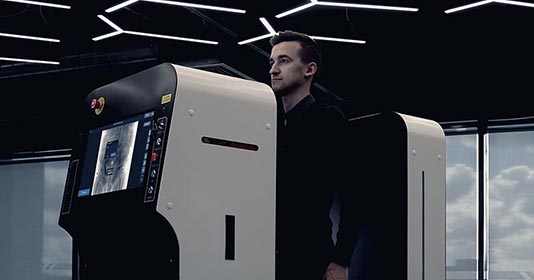
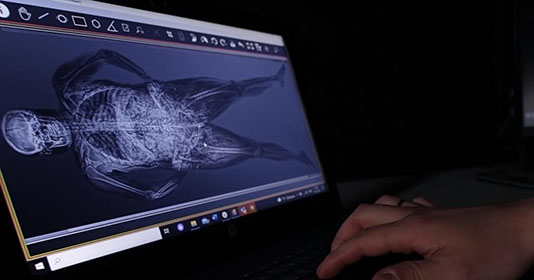
Transportation security is not limited to vehicles and cargo. Passengers, drivers, staff and other personnel may also need to be screened in high-security environments. The CONPASS series of transmission X-ray systems provides a method for detecting prohibited items concealed under clothing or within body cavities, while reducing reliance on intrusive physical searches. For bus terminals, secure transit zones, border facilities and controlled transportation areas, CONPASS supports faster and more consistent screening of individuals. Its low-dose X-ray approach provides a full-body image that helps operators detect internal and external threats. Because the scan process is fast, passenger and personnel lines can move more efficiently, reducing crowding and the staffing burden associated with manual searches. When CONPASS is integrated with vehicle and cargo screening, agencies can create a more complete security environment. Vehicles, freight and people can be inspected as part of one coordinated process, reducing gaps between separate screening points and improving overall control of the facility.Using Automated Threat Recognition to Reduce Operator Burden
As inspection volumes increase, the role of automated threat recognition becomes more important. X-ray images can be complex, especially when cargo is dense or when concealment methods are designed to confuse visual interpretation. Automated software helps operators by flagging areas of interest and supporting a management-by-exception workflow. Instead of treating every image as a fully manual review task, operators can focus attention on suspicious areas identified by the system. This does not remove the operator from the process. It helps trained personnel work more efficiently by reducing routine workload and improving consistency across large volumes of scans. For U.S. transportation facilities, this is essential for scalability. Ports of entry, cargo terminals and secure transit zones must be able to handle growing traffic without proportionally increasing staffing costs. Automated threat recognition supports that goal by helping X-ray security solutions for transportation become faster, more consistent and easier to manage.| System Type | Primary Application | Key Efficiency Benefit |
| DTP 320DVB | Drive-through vehicle and cargo inspection | Supports high-throughput screening without routine unloading. |
| MEAP Systems | Multi-energy cargo and vehicle scanning | Improves material discrimination and reduces unnecessary secondary checks. |
| MIP (Mobile) | Temporary, remote or intelligence-led inspection points | Allows inspection capability to be redeployed based on operational demand. |
| CONPASS | Passenger and personnel screening | Helps detect concealed internal and external threats with reduced reliance on physical searches. |
| Dual-View Systems | Dense cargo and complex load inspection | Provides two angles of view to support faster image interpretation. |

Manage Consent
Functional Always active
The technical storage or access is strictly necessary for the legitimate purpose of enabling the use of a specific service explicitly requested by the subscriber or user, or for the sole purpose of carrying out the transmission of a communication over an electronic communications network.
Preferences
The technical storage or access is necessary for the legitimate purpose of storing preferences that are not requested by the subscriber or user.
Statistics
The technical storage or access that is used exclusively for statistical purposes. The technical storage or access that is used exclusively for anonymous statistical purposes. Without a subpoena, voluntary compliance on the part of your Internet Service Provider, or additional records from a third party, information stored or retrieved for this purpose alone cannot usually be used to identify you.
Marketing
The technical storage or access is required to create user profiles to send advertising, or to track the user on a website or across several websites for similar marketing purposes.