

Group website:
Other company websites:
Choose website







Compact Jail Body Scanners: A Practical Answer to Modern Contraband Risks


10 May 2026
Compact Jail Body Scanners: A Practical Answer to Modern Contraband Risks
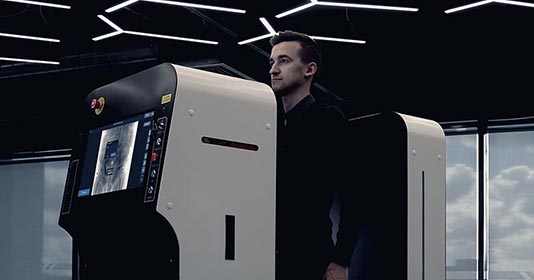
Modern jails need reliable ways to detect concealed narcotics, weapons and prohibited items during intake without adding pressure to daily operations. Compact body scanning systems such as CLEARPASS C.i. help correctional facilities strengthen screening even when space is limited.
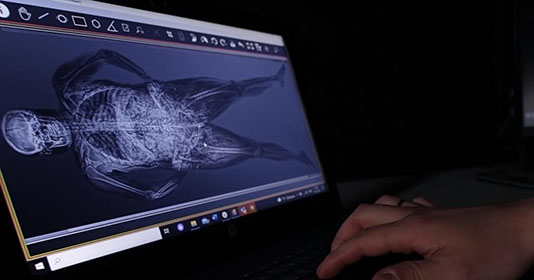
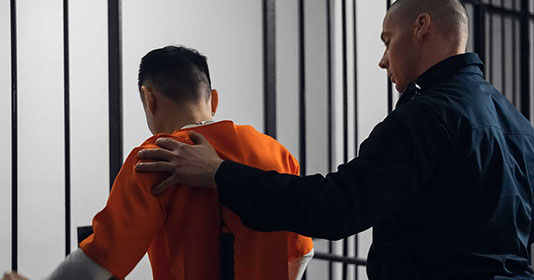
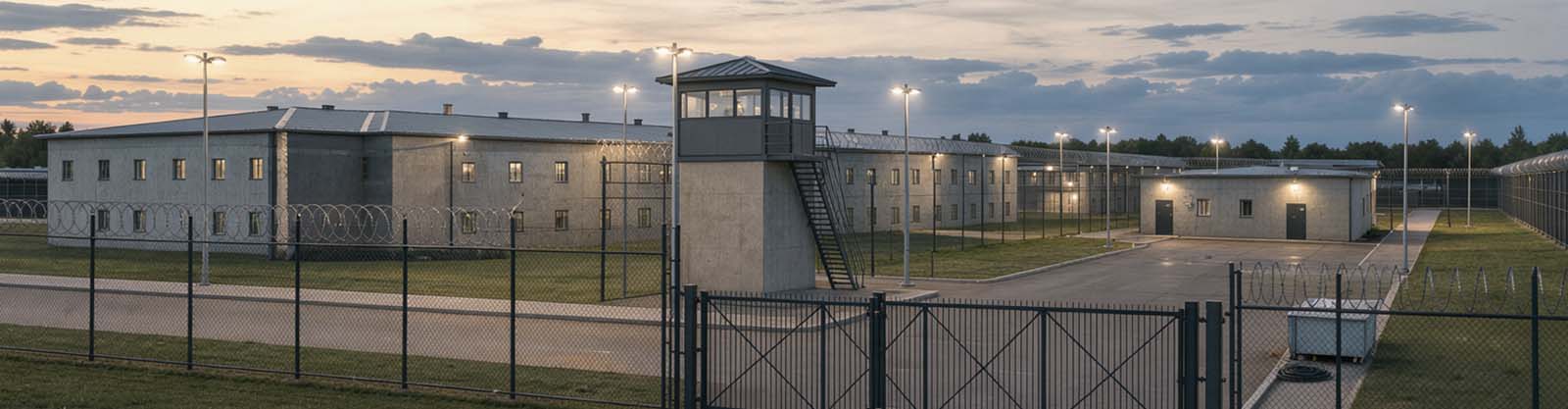
A jail body scanner helps correctional facilities detect concealed contraband during intake before narcotics, weapons or prohibited items reach the holding population. For county jails, sheriff’s offices, detention centers and correctional facilities, intake remains one of the most important security control points. Items may be hidden under clothing or inside the body, where visual checks and manual searches may not provide enough visibility.
This challenge is especially serious for older jail facilities. Many were built decades before today’s contraband threats emerged. Intake areas may have limited space, fixed layouts and little room for large screening installations. Yet the need to prevent drugs, weapons and other prohibited items from entering the facility remains urgent.
Why Intake Screening Needs Better Visibility
Contraband that enters through intake can quickly become a facility-wide problem. A small amount of narcotics can create an overdose risk. A concealed weapon can threaten officers and inmates. A prohibited item that reaches the housing population can lead to investigations, lockdowns, emergency response or potential liability.
Manual searches still have a role, but they should not be the only layer of protection. They can be time-consuming, intrusive and dependent on staff availability, experience and fatigue. Body scanning adds a technology-based layer of visibility, giving officers more information before a person moves deeper into the facility.
The Value of Compact Body Scanning
Compact systems such as CLEARPASS C.i. are designed for correctional environments where space is limited but security requirements remain high. Instead of requiring a large installation footprint, a compact body scanner can support targeted intake screening within the physical limits of a jail facility.
This makes advanced screening more practical for sheriff’s offices and county jails that may not have the space or budget for larger systems. The benefit is not only detection. It is also deterrence. When individuals know that body scanning is part of the intake process, attempts to smuggle prohibited items may decrease before they reach the cell block.
What the Iroquois County Case Shows
Iroquois County Sheriff’s Office in Watseka, Illinois faced this exact challenge. After an inmate death in custody and growing concerns about contraband entering the jail, the agency needed a more reliable intake screening process. The jail was built in the 1960s, so the available footprint became a major factor in the selection process.
The agency selected CLEARPASS C.i. because it provided a practical balance of compact design and targeted body scanning capability. The system was integrated into the intake process for individuals expected to remain in the jail for more than two hours or to be housed in the general population, with additional scans performed when suspicious behavior or officer concern justified it.
Over 2.5 years, Iroquois County Sheriff’s Office completed 517 scans, averaging more than 17 scans per month. The agency also reported that the scanner became a deterrent, discouraging attempts to bring contraband into the jail before they reached the cell block.
A Practical Model for County Jails
The most effective screening strategy is not always the largest or most complex one. It is the one that fits the facility, the workflow and the threat environment. A compact jail body scanner can help agencies improve safety while keeping intake procedures manageable and proportionate.
For correctional facilities working with limited space, compact body scanning provides a realistic way to strengthen contraband prevention, support officer decision-making and reduce the risks associated with concealed narcotics, weapons and prohibited items.
Read the full case study here: CASE: Contraband Detection in Jail | Iroquois County Sheriff’s Office.

Manage Consent
Functional Always active
The technical storage or access is strictly necessary for the legitimate purpose of enabling the use of a specific service explicitly requested by the subscriber or user, or for the sole purpose of carrying out the transmission of a communication over an electronic communications network.
Preferences
The technical storage or access is necessary for the legitimate purpose of storing preferences that are not requested by the subscriber or user.
Statistics
The technical storage or access that is used exclusively for statistical purposes. The technical storage or access that is used exclusively for anonymous statistical purposes. Without a subpoena, voluntary compliance on the part of your Internet Service Provider, or additional records from a third party, information stored or retrieved for this purpose alone cannot usually be used to identify you.
Marketing
The technical storage or access is required to create user profiles to send advertising, or to track the user on a website or across several websites for similar marketing purposes.