

Group website:
Other company websites:
Choose website















Clear Bags. Clear Dilemmas.



02 June 2026
Clear Bags. Clear Dilemmas.
Great in theory. Problematic in practice.
Over the past decade, clear bag policies have become an increasingly familiar and widely adopted part of the entry experience at entertainment venues, schools, and other facilities that experience high foot traffic. The idea behind these policies is simple: transparent bags allow security staff to quickly see what guests are carrying, theoretically speeding up screening and reducing risk. At a glance, the approach appears to be a winning strategy. In practice, however, the reality is often more complicated.
While no security method is 100% effective in screening personal items, clear bag policies can present their own set of unique challenges often overlooked by security personnel.
Privacy in Plain Sight
One of the most significant challenges surrounding clear-bag policies is the issue of personal privacy. Guests attending events frequently carry items that are entirely ordinary but also deeply personal. Feminine hygiene products, medications, medical supplies, digestive aids, and other private necessities are common in everyday bags.
When these items are placed on display within a transparent bag, it can create uncomfortable situations. For many attendees, the experience of having personal items visible to strangers in a crowded line can cause embarrassment or anxiety. This is particularly true for women and individuals managing medical conditions, who may already feel vulnerable discussing or revealing these necessities.
While security screening is essential, the visibility inherent in clear-bag policies can unintentionally put personal dignity at odds with venue safety procedures.
The Human Factor in Visual Screening
Another challenge is reliance on visual inspection alone. Even with clear bags, security staff must still carefully inspect the contents to ensure prohibited items are not concealed among permitted ones. In busy entry environments, often with thousands of guests arriving in short time windows, this type of visual inspection is rarely as straightforward as it appears.
Lighting conditions, bag organization, and simple human fatigue can all affect the consistency of visual screening. What one security officer might notice immediately could be missed by another during a moment of distraction or under pressure to keep lines moving.
The result is an inspection process that can vary widely from lane to lane or from event to event. While the policy itself may be standardized, the execution often depends on the individual performing the check.
Speedy Solution or Bothersome Bottleneck?
Clear-bag policies are frequently justified as a way to accelerate entry. The rationale seems simple: if items are visible, security personnel should spend less time searching bags. But in many cases, the expected efficiency gains do not fully materialize.
Even when bags are transparent, staff still need to pause to visually inspect their contents. Guests may pack items in layers or small pouches, requiring officers to spend extra time verifying what they see. When multiplied across hundreds or even thousands of attendees, those seconds add up quickly.
Secondary inspections can further slow the process. If a bag’s contents aren’t immediately identifiable, staff may ask guests to remove items for closer inspection, temporarily halting the flow of the line. Ironically, the very policy designed to streamline entry can sometimes create bottlenecks.
Rethinking the Balance
None of the listed challenges suggest that venues should abandon efforts to implement and maintain strong security. Large gatherings require thoughtful risk management, and screening processes play a critical role in keeping guests safe.
However, the widespread adoption of clear-bag policies raises an important question: are venues, schools, or other high-foot-traffic buildings balancing efficiency, privacy, and security as effectively as possible?
As venue operators continue to focus on improving the fan experience, there may be opportunities to rethink how screening is conducted. Solutions that allow staff to verify bag contents quickly while minimizing the exposure of personal items could help reduce discomfort while maintaining strong safety standards.
A Smarter Security Approach
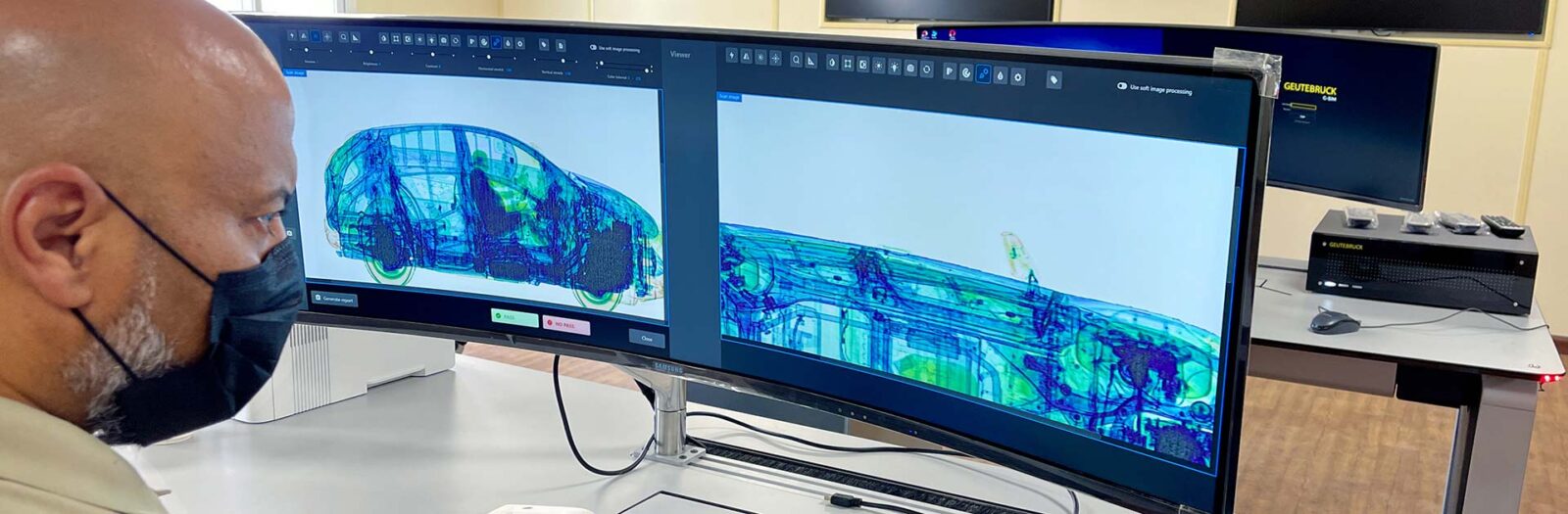
As venues continue to evaluate how to balance safety, efficiency, and guest experience, emerging technologies are opening the door to more effective approaches. Instead of relying solely on visual inspection (whether through clear bags or manual searches), advanced screening solutions can provide a more consistent and less intrusive way to verify what guests are carrying.
The LV STREAM represents one of these next-generation approaches. Designed to scan bags efficiently and accurately without requiring guests to remove or expose personal items, it helps reduce reliance on manual inspection while maintaining a smooth flow of entry. Available with either a 17″ × 13″ tunnel opening (5030 model) or a larger 24″ × 17″ tunnel opening (6045 model), the system can accommodate a wide range of bag sizes and venue screening requirements.
By allowing security teams to focus on real threats rather than routine bag checks, venues can improve both operational efficiency and the overall fan experience. In an environment where expectations around both safety and privacy continue to evolve, solutions like the LV STREAM offer a path forward—one that moves beyond the limitations of clear-bag policies and toward a more seamless, dignified, and effective screening process.

Manage Consent
Functional Always active
The technical storage or access is strictly necessary for the legitimate purpose of enabling the use of a specific service explicitly requested by the subscriber or user, or for the sole purpose of carrying out the transmission of a communication over an electronic communications network.
Preferences
The technical storage or access is necessary for the legitimate purpose of storing preferences that are not requested by the subscriber or user.
Statistics
The technical storage or access that is used exclusively for statistical purposes. The technical storage or access that is used exclusively for anonymous statistical purposes. Without a subpoena, voluntary compliance on the part of your Internet Service Provider, or additional records from a third party, information stored or retrieved for this purpose alone cannot usually be used to identify you.
Marketing
The technical storage or access is required to create user profiles to send advertising, or to track the user on a website or across several websites for similar marketing purposes.