

Group website:
Other company websites:
Choose website







AI-Driven Contraband Detection for Correctional and Secure Facilities



AI-Driven Contraband Detection for Correctional and Secure Facilities
Secure facilities need faster, more consistent screening without relying only on manual searches. AI-assisted X-ray technology helps detect concealed contraband in people, bags, parcels and vehicles while supporting safer entry control.
Key Takeaways
- AI contraband detection is helping correctional facilities, customs posts and high-security sites reduce dependence on manual-only searches.
- AI-assisted X-ray imaging supports consistent threat recognition during long shifts, high traffic periods and repetitive screening work.
- LINEV Systems develops platforms such as CLEARPASS body scanners, CLEARPASS Ci, BV 6045 and assistance software to support officers without removing their judgment.
- The main value of automation is not replacing officers, but helping them focus on decisions, escalation and response.
Why Manual Search Alone Is No Longer Enough
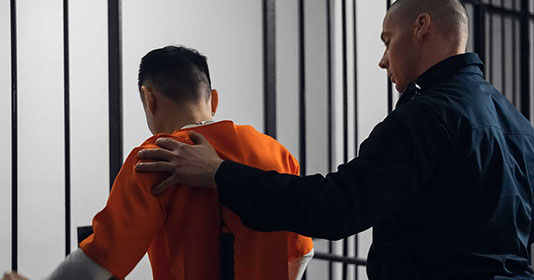
Manual search has not become irrelevant. It has become overloaded. Correctional facilities must process staff, visitors, contractors, new intakes, transfers, mail, parcels and property. Customs and border locations must inspect people, vehicles and cargo without shutting down movement. Government and VIP buildings need security that is thorough but not visibly disruptive. Across these environments, the same operational problems appear again and again. Manual inspection is slow when volumes are high. Search quality can vary from one officer to another. Fatigue affects attention. Physical searches can increase tension and may expose staff to weapons, sharps, narcotics or biohazards. AI-assisted X-ray screening addresses these issues by adding a consistent layer of image analysis. The system does not become tired after hundreds of scans. It applies the same detection logic at the beginning and end of the shift. It helps highlight suspicious shapes, density differences and abnormal object placement that may be difficult to identify quickly during manual review. This is where AI contraband detection delivers its practical value. It does not remove trained personnel from the process. It helps make each minute of officer attention more productive.How AI-Assisted Screening Changes the Officer Workflow
A common concern is that automation replaces human judgment. In real security operations, the opposite is usually true. AI-assisted screening changes what officers spend their time doing. They perform less repetitive searching and more decision-based work. In a manual-only workflow, an officer may spend a large part of a shift inspecting similar bags, parcels or images with the same level of effort. Over time, this becomes mentally exhausting. In an AI-assisted workflow, the system helps identify regions of interest. The officer then reviews, confirms, dismisses or escalates the alert. This makes the officer’s role more focused. Instead of being the only line of visual detection, the officer becomes the decision-maker supported by clearer information. That matters in environments where one missed item can create a serious incident. Training also changes. Teams still need to understand X-ray images and security procedures, but they can spend more time on response protocols, communication, evidence handling and escalation. Supervisors can also use system data to better understand alert patterns, post performance and staffing needs.Correctional Facilities and Body Scanner Deployment
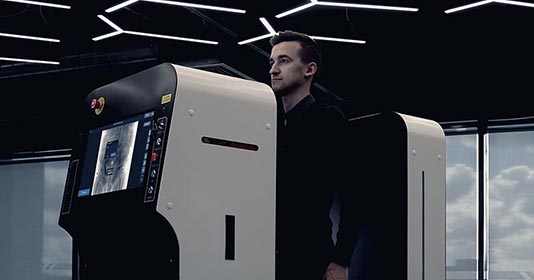
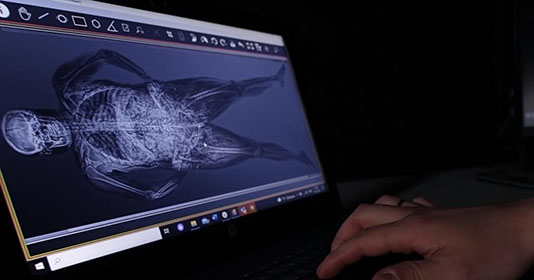
The shift is especially important in correctional environments. Contraband may be hidden under clothing, inside body cavities, in property bags, in shoes, in documents or inside ordinary-looking parcels. Drugs, phones, weapons, SIM cards and other prohibited items can create major safety risks once they enter a secure facility. LINEV Systems CLEARPASS body scanners, including the portable CLEARPASS Ci, are designed for controlled environments where repeatable screening is required. They support detection of items concealed on or inside the body, helping facilities reduce dependence on invasive searches and improve consistency across intake, visitation, staff entry and other movement points. The advantage is both operational and protective. Officers gain visual evidence before a person enters the secure area. Facilities reduce the chance that high-risk contraband reaches housing units. Screening becomes less dependent on the experience level or fatigue level of a single staff member.Parcel, Mailroom and Bag Screening
Contraband does not enter secure facilities only through people. Mailrooms, property rooms, service entrances and visitor processing areas can also become entry routes. Packages, documents, clothing, tools, personal items and bags may all be used to conceal prohibited materials. The BV 6045 supports X-ray screening of bags and smaller parcels, helping staff inspect internal contents without opening every item by hand. With assistance software, operators can focus on suspicious scans and reduce time spent on routine items that show no indication of concern. This is especially useful in high-volume environments. A mailroom or property area that relies only on manual inspection can become slow, inconsistent and labor-intensive. AI-assisted X-ray screening creates a more structured process where staff time is used for review and response rather than repetitive opening and visual searching.Beyond Corrections: Customs, Industry and Public Security
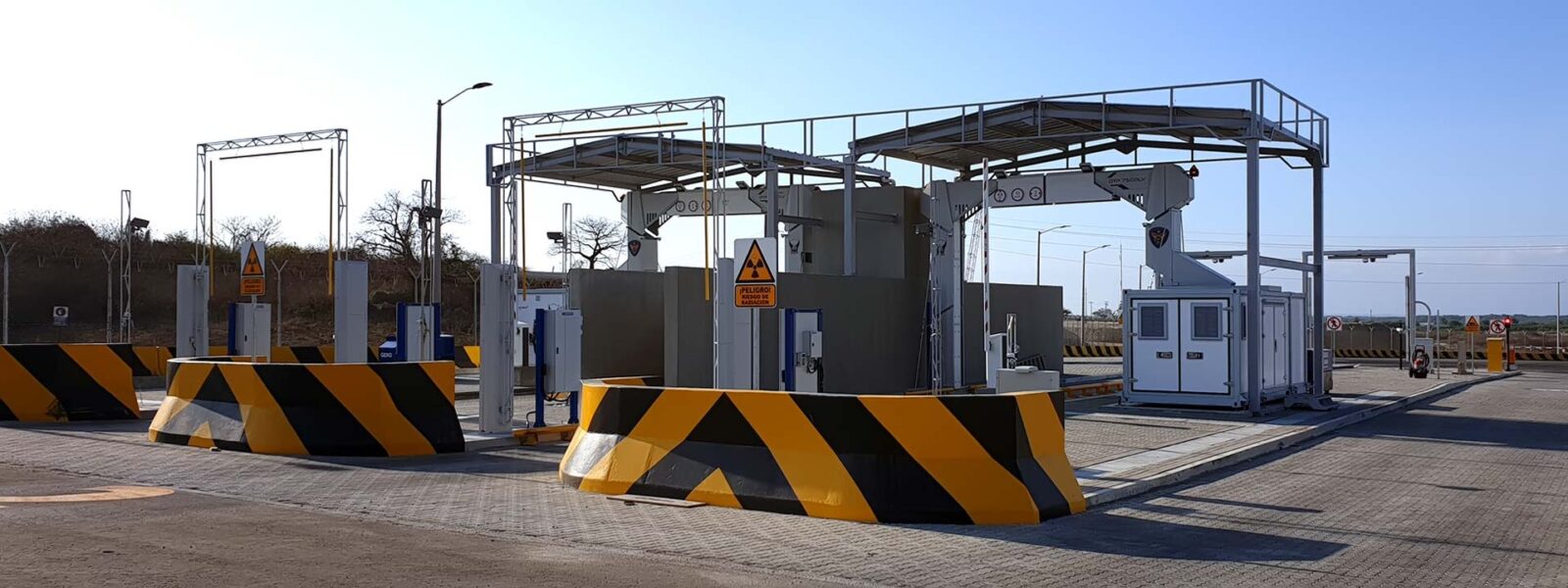
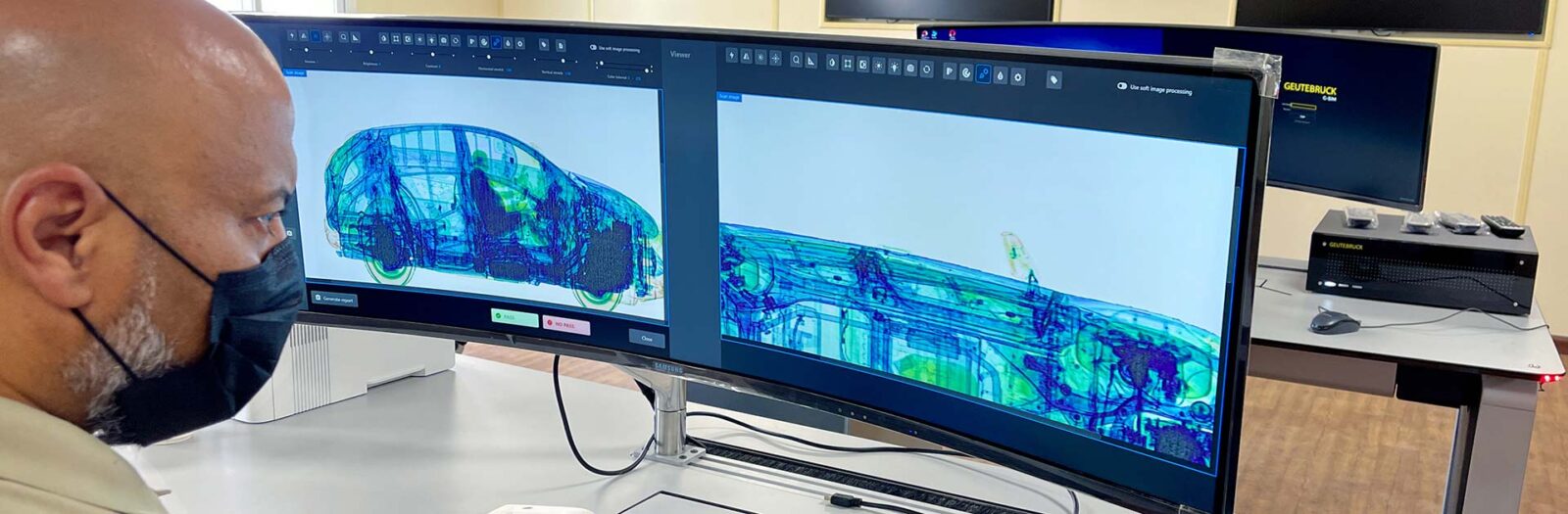
The same pressure exists outside correctional facilities. Customs and border teams need to inspect vehicles and cargo without unloading every shipment. Industrial sites and mines may need to screen large numbers of workers at shift change. Government and VIP buildings must screen visitors while avoiding long lines. Public events and transportation hubs often have too much traffic for manual search to serve as the primary method. AI-driven screening helps these environments manage volume. X-ray and body scanner platforms can be adapted to the facility type, threat profile, available footprint and staffing model. The result is not one universal checkpoint design, but a more flexible screening approach built around real traffic conditions. In each setting, the core idea remains the same. Technology absorbs more of the repetitive visual work, while trained personnel remain responsible for assessment, communication and action.How the Shift Plays Out Across Facility Types
| Facility Type | Manual-Only Approach | AI-Assisted Approach |
| Correctional facilities | Pat-downs, property searches and visual contraband checks | CLEARPASS body scanners, parcel screening and automated alert support |
| Customs and borders | Manual vehicle inspection and cargo unloading | Drive-through and tunnel X-ray screening with image assistance |
| Mailrooms and parcel hubs | Opening large numbers of packages by hand | BV 6045 screening with focused review of suspicious items |
| Mines and industrial sites | Visual checks during shift change | High-throughput body and bag screening at access points |
| Government and VIP buildings | Bag checks, metal detection and manual visitor screening | Layered X-ray screening with operator assistance software |
| Public events and transport | Spot checks under time pressure | Mobile or modular screening supported by automated review |

Manage Consent
Functional Always active
The technical storage or access is strictly necessary for the legitimate purpose of enabling the use of a specific service explicitly requested by the subscriber or user, or for the sole purpose of carrying out the transmission of a communication over an electronic communications network.
Preferences
The technical storage or access is necessary for the legitimate purpose of storing preferences that are not requested by the subscriber or user.
Statistics
The technical storage or access that is used exclusively for statistical purposes. The technical storage or access that is used exclusively for anonymous statistical purposes. Without a subpoena, voluntary compliance on the part of your Internet Service Provider, or additional records from a third party, information stored or retrieved for this purpose alone cannot usually be used to identify you.
Marketing
The technical storage or access is required to create user profiles to send advertising, or to track the user on a website or across several websites for similar marketing purposes.