

Group website:
Other company websites:
Choose website











Advanced X-Ray Screening for Contraband Control in Correctional Facilities



30 July 2026
Advanced X-Ray Screening for Contraband Control in Correctional Facilities
Correctional facilities face rapidly changing contraband threats, from fentanyl and microelectronics to weapons hidden on or inside the body. Advanced X-ray screening helps facilities improve detection, reduce invasive searches and protect staff, visitors and incarcerated individuals.
Correctional X-ray screening is now essential for facilities that need to detect fentanyl, phones, weapons and hidden contraband before they reach secure areas. The threat environment inside jails, prisons and detention facilities has changed dramatically. Contraband is no longer limited to obvious metal objects or bulky packages. It may be a micro-sized communication device, a synthetic drug hidden in paper, a weapon component made from plastic, or an item concealed internally within the human body. This shift has made traditional screening methods less reliable on their own. Metal detectors, pat-downs, manual parcel checks and visual inspection still have a role, but they cannot provide the level of visibility required for today’s correctional security challenges. Modern X-ray security solutions for correctional facilities give officers a clearer way to inspect people, mail, parcels, property and carried items without relying only on physical searches. For U.S. correctional administrators, the goal is not simply to add more equipment at the front door. The goal is to create a stronger interdiction process that reduces contraband flow, protects staff, lowers risk inside housing units and helps facilities operate with greater control.
Why Traditional Screening Is No Longer Enough
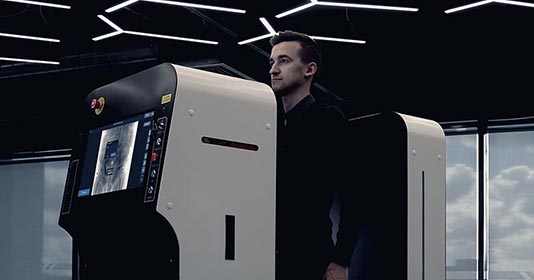
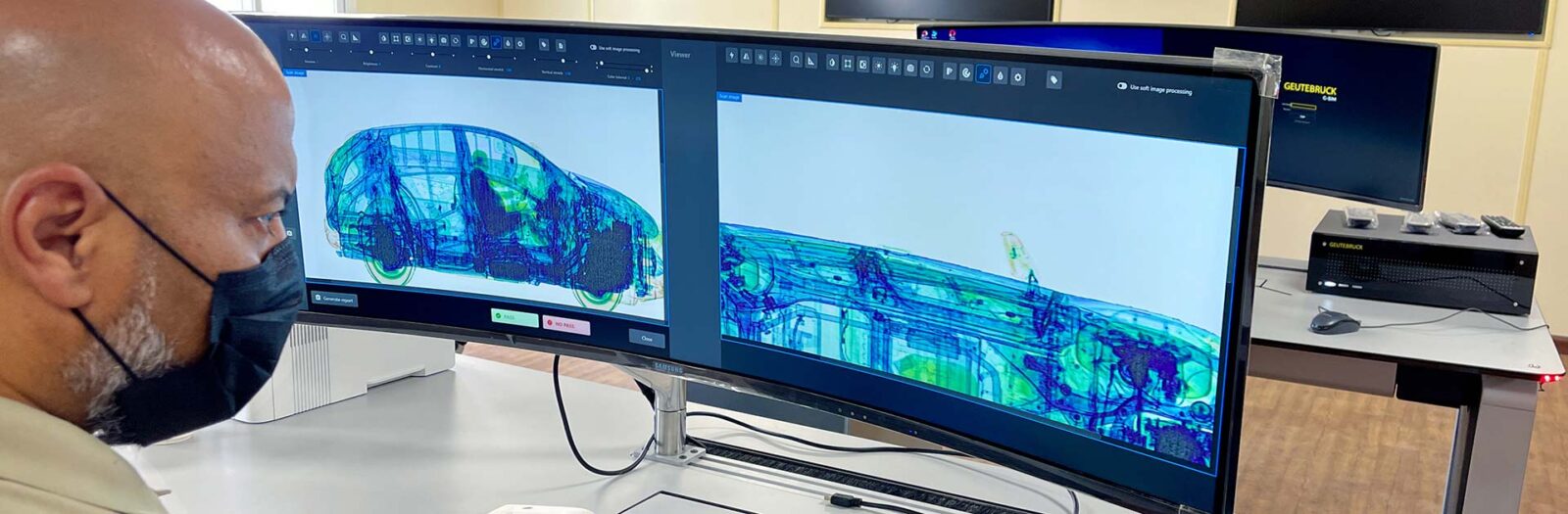
Correctional facilities are dealing with smaller, more dangerous and more difficult-to-detect threats. A single hidden phone can support criminal coordination, witness intimidation, extortion or escape planning. A small amount of fentanyl or another synthetic opioid can create a medical emergency, expose staff to risk and destabilize an entire unit. A non-metallic weapon or improvised tool may bypass older detection methods if screening is focused mainly on metal. This is why modern screening must look beyond the surface. Security teams need to identify density differences, organic materials, internal concealment, suspicious shapes and abnormal object placement. X-ray imaging provides that visibility by allowing officers to inspect what cannot be seen during a visual check. A practical correctional screening strategy often includes several layers:- Low-dose full-body transmission X-ray scanners for detecting internally concealed items and objects hidden under clothing.
- Small-parcel and baggage scanners with dual-energy imaging for screening mail, property, bags, packages and personal items.
- AI-assisted software that highlights potential threats and helps reduce routine image review burden on operators.
Detecting Contraband Hidden on or Inside the Body
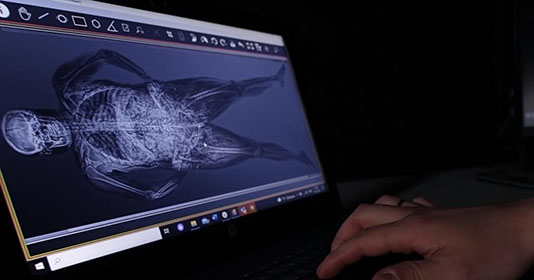
One of the most difficult challenges in correctional security is internal concealment. Contraband may be swallowed, inserted into body cavities or hidden under clothing in ways that are not reliably detected by pat-downs or metal detectors. These methods are often used for drugs, small electronics, blades, SIM cards and other high-risk items. Low-dose full-body X-ray scanners help address this problem by providing a fast, non-contact inspection method. The system can reveal objects concealed internally or externally, giving officers visual evidence before an individual enters a secure area. This is particularly important during intake, transfer, visitation processing and other high-risk movement points. The operational benefit is significant. Instead of relying heavily on invasive searches, facilities can use X-ray screening to make better-informed decisions. This supports staff safety, helps reduce confrontation and creates a more consistent process for identifying threats that may otherwise be missed.Screening Mail, Parcels and Property
Contraband does not always enter through a person. Mail, packages, property bags, legal documents, books, clothing, food items and service deliveries can also be used to move prohibited materials into a correctional environment. The rise of synthetic drugs has made this pathway especially dangerous because substances may be hidden in very small quantities or absorbed into paper and other materials. Small-parcel and baggage X-ray scanners give mailroom and property staff a better way to inspect these items before they move deeper into the facility. Dual-energy imaging helps distinguish organic and inorganic materials, giving operators more useful information than a simple visual check. This can support the detection of drugs, weapons, electronics, modified objects and suspicious materials concealed inside ordinary items. For busy facilities, the value is not only detection. It is consistency. Manual inspection quality can vary depending on time pressure, fatigue and experience. X-ray screening creates a more structured process that helps staff inspect more items with a clearer basis for decision-making.AI-Assisted Detection and Operator Support
Correctional screening is demanding work. Operators may review large numbers of images during intake, visitation, shift changes, mail processing or property movement. Over time, fatigue can affect attention, especially when most scans appear routine. AI-assisted detection helps improve this workflow by flagging suspicious areas for review. The software can support recognition of weapons, restricted items and abnormal objects in scanned images, helping the operator focus on areas that require closer attention. The operator remains responsible for assessment and final decision-making, while the system helps reduce workload and improve consistency. This approach is especially valuable in facilities where staffing is limited and security teams must do more with existing resources. Instead of depending entirely on manual image interpretation, X-ray security solutions for correctional facilities can help create a more efficient review process while maintaining officer control over the final response.Operational Value Beyond the Checkpoint
Advanced X-ray screening provides benefits beyond the moment of detection. When incarcerated individuals, visitors, vendors and staff understand that a facility uses high-resolution screening, the perceived chance of successful smuggling decreases. This deterrent effect can reduce attempts before they occur. There is also a direct operational benefit. Fewer contraband incidents can mean fewer lockdowns, fewer emergency medical responses, fewer cell searches, fewer investigations and less disruption to normal facility routines. Every intercepted phone, drug package or weapon can prevent a much larger security event. From a financial perspective, the return is measured not only in equipment performance, but in avoided incidents. Preventing a synthetic drug overdose, a coordinated assault, an escape attempt or a communication-enabled criminal act can protect the facility from major operational, legal and reputational consequences.Building a Stronger Correctional Security Perimeter
The modern correctional perimeter is not just a fence, wall or locked door. It includes every point where people, property, mail, deliveries and services enter the institution. If any of these pathways are weak, contraband can continue to move inside despite visible security measures elsewhere. A stronger approach uses X-ray screening as part of a connected security strategy. Full-body scanners help detect internal and external concealment. Parcel and baggage scanners help control mail, property and deliveries. AI-assisted software helps operators focus on potential threats with greater consistency. Together, these technologies support a safer environment for officers, staff, visitors and the incarcerated population. For U.S. correctional facilities, advanced X-ray security is no longer a future concept. It is a practical tool for controlling contraband, reducing risk and giving officers the visibility they need before a threat reaches the housing unit.
Manage Consent
Functional Always active
The technical storage or access is strictly necessary for the legitimate purpose of enabling the use of a specific service explicitly requested by the subscriber or user, or for the sole purpose of carrying out the transmission of a communication over an electronic communications network.
Preferences
The technical storage or access is necessary for the legitimate purpose of storing preferences that are not requested by the subscriber or user.
Statistics
The technical storage or access that is used exclusively for statistical purposes. The technical storage or access that is used exclusively for anonymous statistical purposes. Without a subpoena, voluntary compliance on the part of your Internet Service Provider, or additional records from a third party, information stored or retrieved for this purpose alone cannot usually be used to identify you.
Marketing
The technical storage or access is required to create user profiles to send advertising, or to track the user on a website or across several websites for similar marketing purposes.