

Group website:
Other company websites:
Choose website






CASE: Contraband Detection in Jail | Iroquois County Sheriff’s Office
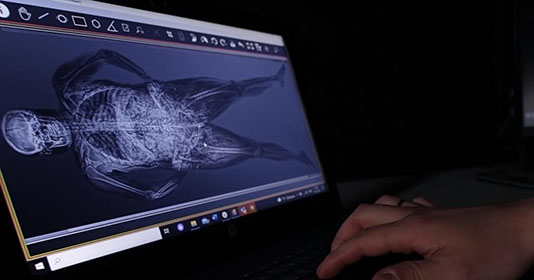
After an inmate death in custody and growing concerns about contraband entering the jail, Iroquois County Sheriff’s Office implemented CLEARPASS C.i. to strengthen intake screening, detect concealed threats and deter smuggling attempts within the space limitations of an older county jail.
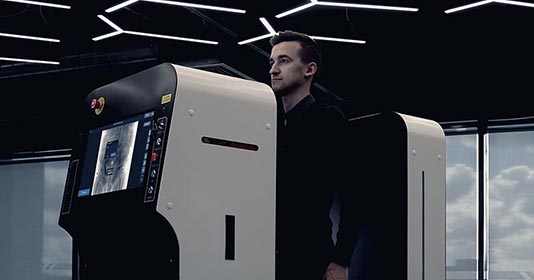
Compact body scanning solution for jail intake security
FEATURED SOLUTION: CLEARPASS C.i. compact partial body scanning system for correctional intake screening.
MARKET: Corrections
APPLICATION: Narcotic, weapon, and prohibited item detection
Objective
After the death of an inmate in custody and hearing rumors related to contraband smuggling taking place within the jail, Iroquois County Sheriff’s Office decided to take a proactive approach to detecting contraband on or inside inmate bodies before they entered the holding facility. The decision was made to secure and implement a state-of-the-art body scanning device.
This case study outlines the Sheriff’s Office’s efforts, the approach taken in research and procurement, and the positive outcomes observed after implementing the LINEV Systems CLEARPASS C.i. partial body scanning system.
Background
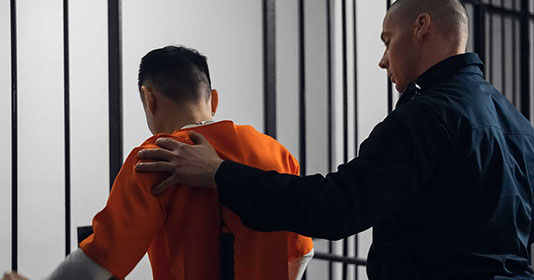
Following the death of an inmate in custody due to the ingestion of substances at a traffic stop prior to arrest and amid growing rumors and concerns about inmates smuggling drugs and other contraband into the facility, Iroquois County Sheriff’s Office was faced with a similar challenge that many correctional facilities face nationwide: Inmates finding ways to conceal prohibited items on or inside their bodies without detection.
The Sheriff’s Office began actively seeking a solution. Body scanners quickly emerged as a viable option.
I had looked at body scanners at the Illinois Sheriff’s Conference in the past,” said Sheriff Clint Perzee, “but once I [looked into] the price, I knew with our slim budget for the county, we would never be able to afford anything like that.
That changed with the introduction of funding through the American Rescue Plan Act (ARPA), a federal program designed to provide financial support to state and local governments for critical infrastructure, public health, and safety improvements.
Once the ARPA money was introduced, [body scanners were] the first thing that came to mind that could really make a difference and save the county on litigation and proactively prevent overdose deaths or serious injuries due to something getting smuggled into the jail.
As the Sheriff’s Office began to more closely evaluate available body scanning systems, another challenge surfaced: limited space within the facility.
Once the ARPA money was introduced, [body scanners were] the first thing that came to mind that could really make a difference and save the county on litigation and proactively prevent overdose deaths or serious injuries due to something getting smuggled into the jail.
Selection Process
We [looked at two body scanning] units but were very limited in space in our older jail that was built in the 1960’s. I liked both units, but it came down to customer service and relationships in the end. We initially planned for the larger CLEARPASS unit, but once the CLEARPASS C.i. was available, it fit us perfectly for the size we needed. CLEARPASS C.i. provided a practical answer: a compact partial body scanning system designed for correctional facilities where available space is limited, but security requirements remain high.
The LINEV Systems CLEARPASS C.i. is the only partial body scanning system currently available, purpose-built with sheriff’s offices like Iroquois County’s in mind. Its compact, portable design makes it an ideal solution for facilities where space is limited, but security cannot be compromised. By enabling targeted, efficient screening without the footprint of traditional full-body systems, the CLEARPASS C.i. helps agencies enhance contraband detection while maintaining operational flexibility.
RESULTS
After implementing the system and conducting hundreds of scans, Sheriff Clint Perzee reported clear and measurable operational benefits:
In the past 2.5 years we have completed 517 scans [as of the publication date of this case study], averaging over 17 per month. We only scan people who will be staying at the jail for more than 2 hours or are going to be housed in the general population. If someone is going to be booked and released without any special circumstances, such as furtive movements prior to arrest or an officer requesting a scan due to suspicious actions of the arrestee, the person is not scanned. We have not had many issues with arrestees not agreeing to the scan, as they will not be fully processed and placed in a cell block without a scan, and will be held in the holding cell until the scan is completed. We have had some connectivity and computer issues that were taken care of very swiftly by LINEV.All in all, I believe just having the scanner is a deterrent to arrestees attempting to smuggle items into the jail. LINEV body scanning technology with threat detection is so impactful that our inmates rarely even try fooling the technology anymore. It’s that impressive!
Additionally, the agency found the system to be easy to integrate into existing workflows, requiring minimal disruption to daily operations. As staff became more familiar with the technology, its use became a routine part of the intake process
CONCLUSION
Iroquois County Sheriff’s Office’s decision to implement the CLEARPASS C.i. system from LINEV Systems has had a meaningful impact on both safety and operational efficiency within the facility. The agency not only improved its ability to detect concealed contraband but also introduced a powerful deterrent that discourages smuggling attempts before they begin.
By leveraging available funding, prioritizing solutions that fit their physical constraints, and partnering with LINEV Systems, the Sheriff’s Office successfully implemented a technology that aligns with their mission to protect inmat.
ABOUT LINEV SYSTEMS
LINEV Systems provides advanced X-ray screening technologies for security, correctional, medical, and industrial applications. Operating in more than 100 countries, the company develops practical, high-performance systems designed to improve safety, detection capability, and operational efficiency.
For correctional facilities, LINEV Systems offers body scanning solutions that help detect narcotics, weapons, and prohibited items concealed on or inside the body. CLEARPASS C.i. brings this capability to facilities where space is limited, giving sheriff’s offices and detention centres a compact, targeted, and effective tool for safer intake screening
From Compact Body Scanning to Complete Correctional Security
CLEARPASS C.i. demonstrates how advanced X-ray screening can be adapted to the realities of county jails, detention centers, and correctional facilities where space is limited but contraband risks remain high. It gives agencies a practical way to improve intake screening, strengthen deterrence, and support safer daily operations.
LINEV Systems also offers a broader range of people screening solutions designed for correctional environments, border control, customs, and other high-security facilities. These systems help detect narcotics, weapons, and prohibited items concealed on or inside the body while supporting efficient, non-contact screening workflows.
To explore the full range of CLEARPASS body scanning solutions, visit our dedicated site: clearpass-bodyscan.com.

Manage Consent
Functional Always active
The technical storage or access is strictly necessary for the legitimate purpose of enabling the use of a specific service explicitly requested by the subscriber or user, or for the sole purpose of carrying out the transmission of a communication over an electronic communications network.
Preferences
The technical storage or access is necessary for the legitimate purpose of storing preferences that are not requested by the subscriber or user.
Statistics
The technical storage or access that is used exclusively for statistical purposes. The technical storage or access that is used exclusively for anonymous statistical purposes. Without a subpoena, voluntary compliance on the part of your Internet Service Provider, or additional records from a third party, information stored or retrieved for this purpose alone cannot usually be used to identify you.
Marketing
The technical storage or access is required to create user profiles to send advertising, or to track the user on a website or across several websites for similar marketing purposes.